
Unveiling the Wonders of DTF Ink Application: A Comprehensive Exploration
2025-10-27
Unveiling the Wonders of DTF Ink Application: A Comprehensive Exploration
Table of Contents
-
Introduction
-
High - Quality Prints
-
Versatile Material Compatibility
-
Cost - Effective in the Long Run
-
Efficient Production Process
-
Technical Insights and Parameters
-
Expert Perspectives
-
Addressing Common Concerns with a Glimpse into White DTF Ink
-
Conclusion
Introduction
In the dynamic realm of the printing industry, the application of DTF (Direct - To - Film) ink has emerged as a game - changer. As technology continues to advance, DTF ink application is becoming increasingly popular among printers, whether they are large - scale industrial producers or small - scale custom print shops. This blog post aims to delve deep into the numerous advantages that DTF ink application offers, exploring how it has transformed the way we approach textile and other material printing. From its ability to produce high - quality prints to its cost - effectiveness and material versatility, DTF ink has redefined the possibilities within the printing sector.
High - Quality Prints
Exceptional Color Vividity
DTF ink is renowned for its ability to produce prints with exceptional color vivididity. It can achieve a wide gamut of colors, often meeting or even exceeding the color standards of traditional printing methods. For instance, in the Pantone Matching System (PMS), DTF ink can accurately reproduce a vast number of PMS colors, enabling printers to bring to life the most vibrant and exact color palettes envisioned in their designs.
Compared to some other inks, such as those used in traditional screen printing, DTF ink offers a more dynamic range. Screen printing, while excellent for large - scale, solid - color prints, can sometimes struggle with reproducing intricate gradients and a full spectrum of colors. In contrast, DTF ink can create smooth color transitions, whether it's a soft blend of pastels in a floral design or a bold, high - contrast combination in a sports team logo. This makes it an ideal choice for applications where color accuracy and vibrancy are crucial, like in high - end fashion apparel printing or custom - designed promotional merchandise.
Sharp Image Resolution
In addition to color vivididity, DTF ink enables sharp image resolution. The fine - droplet technology used in DTF printers allows for the precise deposition of ink onto the film, which is then transferred onto the final material. This results in prints that can meet the demands of high - resolution patterns.
For detailed and intricate designs, such as those with small text, fine lines, or complex geometric shapes, DTF ink truly shines. Printers can achieve resolutions of up to 1440 dpi or even higher in some advanced DTF printing systems. This high - resolution capability ensures that every detail of the original design is faithfully reproduced. Whether it's a detailed logo with tiny lettering or a detailed illustration of a landscape, DTF - printed images maintain their sharpness and clarity, even when enlarged. This is in contrast to some lower - quality inks that may cause blurring or pixelation when printing complex designs, especially on a larger scale.
Versatile Material Compatibility
Compatible with Diverse Fabrics
One of the significant advantages of DTF ink application is its versatile material compatibility, especially when it comes to fabrics. DTF ink adheres well to a wide range of textile materials. For example, on cotton fabrics, it provides excellent color saturation and durability. Cotton is a popular choice in the fashion industry, and DTF - printed cotton garments can withstand regular washing without significant color fading or ink peeling. The ink penetrates the cotton fibers to a certain extent, creating a bond that ensures the print remains vibrant and intact over time.
When it comes to polyester fabrics, DTF ink also performs admirably. Polyester is known for its smooth texture and quick - drying properties, and DTF ink can effectively bond with this synthetic material. Prints on polyester often exhibit a high - gloss finish, enhancing the visual appeal of the design. Additionally, for blended fabrics such as cotton - polyester blends or 50/50 blends, DTF ink application is seamless. These blended fabrics combine the advantages of different materials, and DTF ink can accommodate their unique characteristics, delivering high - quality prints that meet the demands of both comfort and aesthetics. Even on nylon fabrics, which are commonly used in sportswear due to their strength and moisture - wicking properties, DTF ink can create long - lasting and visually appealing prints, making it suitable for customizing athletic gear.
Application on Non - fabric Surfaces
Beyond fabrics, DTF ink has also found applications on non - fabric surfaces, although some additional preparation may be required. For instance, on glass, the surface needs to be cleaned thoroughly to ensure proper adhesion. A primer or a pretreatment solution can be applied to the glass to enhance the ink's grip. Once prepared, DTF - printed glass can be used for decorative purposes, such as creating custom - designed glassware, decorative mirrors, or glass panels for interior design. The prints on glass can be made to have a glossy or matte finish, depending on the desired aesthetic.
On wood, DTF ink can be used to create unique designs on furniture, wooden handicrafts, or signage. Similar to glass, the wood surface may need sanding to create a smooth texture and improve ink adhesion. After printing, a protective coating can be applied to preserve the print and give the wood a finished look. The natural grain of the wood can add an extra dimension to the DTF - printed design, making each piece one - of - a - kind.
Even on metals, with the right pretreatment methods like degreasing and applying an appropriate adhesion promoter, DTF ink can be used to create durable prints. This is useful for customizing metal products such as keychains, jewelry, or metal signs. The ability to print on non - fabric surfaces expands the creative possibilities of DTF ink, allowing for its use in a wide range of industries beyond just textiles.
Cost - Effective in the Long Run
Reduced Waste
One of the significant cost - saving aspects of DTF ink application is reduced waste. DTF printing technology allows for precise deposition of ink onto the film. Printers can accurately control the amount of ink used based on the design, minimizing over - application. For example, when printing a small logo on a T - shirt, traditional screen printing might require a larger amount of ink to coat the entire screen area, even though only a small portion is actually used for the logo. In contrast, DTF ink can be precisely targeted to the logo area, reducing ink waste.
Moreover, the DTF process also reduces waste in terms of materials. The use of transfer films in DTF printing is more efficient compared to some traditional printing methods. In direct - to - garment (DTG) printing, for instance, there can be a higher risk of misprints on the actual garment, leading to the waste of both the ink and the fabric. With DTF, misprints occur on the film, which is a less costly material compared to the final product. If a print on the film is not satisfactory, it can be easily discarded without wasting the more expensive fabric or other substrates. This precision in ink and material usage not only reduces the overall cost of production but also contributes to a more sustainable printing process by minimizing waste.
Lower Setup Costs
DTF ink application also offers lower setup costs, making it an attractive option for businesses of all sizes, especially small - and medium - sized enterprises (SMEs). Unlike traditional printing methods such as offset printing or some large - scale screen - printing operations, DTF printing does not require extensive and expensive equipment for setup.
For small - batch production runs, DTF printing is particularly cost - effective. In traditional screen printing, setting up screens for each color in a design can be time - consuming and costly. Each screen needs to be prepared, and the process involves purchasing screen - making materials, emulsion, and using specialized equipment for screen exposure. For a design with multiple colors, these setup costs can quickly add up. In DTF ink application, the setup mainly involves preparing the DTF printer, which can be a relatively simple process. Printers can load the ink cartridges, ensure the print heads are in good condition, and start printing. This simplicity in setup allows businesses to produce small - batch orders without incurring high upfront costs. Even for larger - scale production, the initial investment in DTF printing equipment and materials is often more affordable compared to some other high - volume printing technologies, enabling companies to start production with a lower capital outlay.
Efficient Production Process
Faster Turnaround Time
DTF ink application offers a faster turnaround time compared to many traditional printing methods. The process simplifies the printing steps. In traditional screen printing, for example, each color in a design requires a separate screen to be created. This involves steps such as making the screen, applying the emulsion, exposing the design onto the screen, and then washing out the unexposed areas. For a multi - color design, this process can be time - consuming, often taking hours or even days for setup alone.
In contrast, DTF ink application uses digital printing technology to directly print the design onto a transfer film. Once the design is created digitally, it can be sent to the DTF printer immediately. The printer then deposits the ink onto the film in a single pass, regardless of the number of colors in the design. After printing on the film, the transfer process to the final material is relatively quick, usually taking only a few seconds to a minute with a heat press.
In a real - world production scenario, a small - scale print shop might receive an order for 50 custom - designed T - shirts with a four - color logo. With traditional screen printing, the setup time for the four screens could be around 2 - 3 hours. Then, the actual printing process, considering the time to load the ink onto the screens, print each shirt, and clean the screens between colors, might take another 4 - 5 hours. So, in total, it could take 6 - 8 hours to complete the order.
However, with DTF ink application, the design can be prepared and sent to the printer within 30 minutes. The printing on the film for all 50 shirts might take about 1 - 2 hours, depending on the printer's speed. And the transfer process, if done in batches using a heat press, could be completed in another 1 - 2 hours. So, overall, the order could be completed in 3 - 4 hours, significantly reducing the turnaround time. This faster production speed allows businesses to meet tight deadlines, handle rush orders more efficiently, and ultimately, improve customer satisfaction.
Easy to Operate
Another aspect that contributes to the efficient production process of DTF ink application is its ease of operation. DTF printers are designed to be user - friendly, making it easier for employees to get up to speed quickly. The digital interface of these printers is similar to that of regular office printers or modern digital imaging devices. Workers can easily load the design files, adjust basic printing settings such as color saturation, image size, and print quality through intuitive touch - screen controls or software interfaces.
Unlike some traditional printing methods that require a high level of technical expertise and long - term training, DTF ink application has a relatively low learning curve. For instance, in offset printing, operators need to understand complex machinery, ink - to - water ratio adjustments, and plate - making techniques. A new employee in an offset printing shop might require several months of on - the - job training to become proficient.
In a DTF printing setup, a new staff member can be trained to operate the printer within a few days. They can learn how to load the DTF ink cartridges, replace the transfer films, and perform basic maintenance tasks like cleaning the print heads in a short period. This simplicity in operation not only reduces the time and cost associated with training new employees but also allows businesses to quickly adapt to changes in production demands. With less time spent on training, companies can allocate more resources to actual production, further enhancing their overall efficiency.
Technical Insights and Parameters
General DTF Ink Parameters Table
Here is a general table of DTF ink parameters, which helps to understand the technical specifications and capabilities of DTF ink more comprehensively:
|
Parameter
|
Details
|
Significance
|
|
Color Range
|
Usually includes CMYK (Cyan, Magenta, Yellow, Black) and often white ink. Some advanced DTF inks may also offer additional colors like fluorescent colors or special effects inks.
|
Determines the variety of colors that can be reproduced in a print. A wider color range allows for more vibrant and accurate color representation, which is crucial for complex and colorful designs. For example, in fashion prints with detailed patterns, a full - spectrum color range ensures that all hues are accurately depicted.
|
|
Applicable Print Heads
|
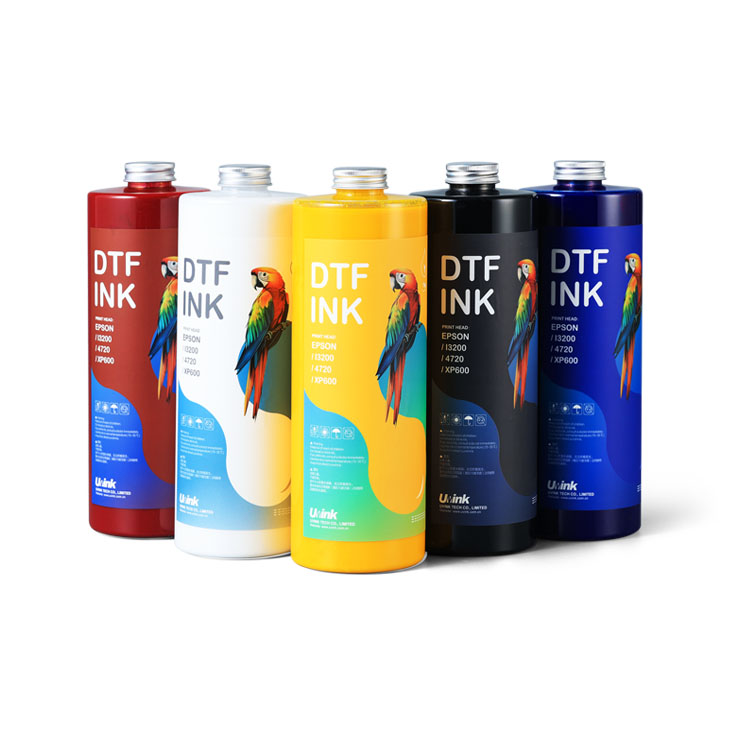
Compatible with various print heads such as Epson i3200, DX5, DX7, etc.
|
Different print heads have their own characteristics in terms of droplet size, printing speed, and accuracy. Compatibility with multiple print heads gives printers more choices based on their production needs. For instance, a high - speed production line might prefer a print head with faster printing speed, while a high - quality, small - batch print shop might prioritize a print head with better precision.
|
|
Wash Fastness
|
Typically rated on a scale (e.g., 3 - 5, with 5 being the highest). A good DTF ink should have a wash fastness of at least 4 for most textile applications.
|
Wash fastness is essential for printed products, especially textiles. It indicates how well the ink will withstand repeated washing without fading or losing its color intensity. High wash fastness ensures that the printed design remains looking good after multiple washes, which is important for consumer satisfaction, especially for products like clothing that are washed regularly.
|
|
Abrasion Resistance
|
Measured by the number of rubs or cycles it can withstand without significant ink wear. For DTF - printed textiles, it should be able to withstand a certain number of abrasion cycles (e.g., 500 - 1000 cycles) depending on the application.
|
Abrasion resistance is crucial as printed materials may be subject to rubbing during normal use. In the case of clothing, it may be rubbed against other fabrics, skin, or surfaces. High abrasion resistance ensures that the print remains intact and does not start to peel or fade prematurely due to friction.
|
|
Viscosity
|
Usually in the range of 10 - 30 cps (centipoise) depending on the printer and ink formulation.
|
Viscosity affects the flow of ink through the print head. If the viscosity is too high, the ink may not flow smoothly, leading to clogging of the print head nozzles. If it is too low, the ink may spread too much on the film, resulting in blurred prints. Maintaining the right viscosity ensures consistent and high - quality printing.
|
|
Particle Size of Pigments
|
For DTF ink, the pigment particle size is typically in the sub - micron range (e.g., 0.1 - 0.5 microns).
|
Smaller pigment particle sizes are beneficial as they can pass through the small nozzles of the print head more easily, reducing the risk of nozzle clogging. Additionally, smaller particles can lead to better color dispersion and more uniform prints, enhancing the overall print quality.
|
Ink Storage and Maintenance
Proper storage and maintenance of DTF ink are crucial to ensure its optimal performance and longevity.
Storage Conditions:
-
Temperature: DTF ink should be stored in a temperature - controlled environment, preferably between 10°C - 30°C. Temperatures outside this range can affect the ink's viscosity and chemical properties. For example, if the ink is stored at a temperature that is too low, it may thicken or even gel, making it difficult to flow through the printer's system. On the other hand, high temperatures can cause the ink to degrade more quickly, reducing its color stability and overall quality.
-
Humidity: The ideal humidity level for storing DTF ink is between 40% - 60%. Low humidity can lead to the evaporation of solvents in the ink, changing its composition and potentially causing nozzle clogging due to the formation of dried ink particles. High humidity, on the other hand, can introduce moisture into the ink, which may affect its drying properties and color accuracy.
-
Light - Avoidance: DTF ink should be stored in a dark place, away from direct sunlight and strong artificial light sources. Light, especially ultraviolet (UV) light, can cause the ink's pigments to fade and the chemical components to break down, reducing the ink's color - fastness and overall performance.
Before - use Preparation: Before using DTF ink, it is essential to gently shake the ink cartridges or containers. This helps to evenly distribute the pigments and other components that may have settled during storage. Shaking should be done carefully to avoid creating excessive foam, as foam can cause air bubbles to enter the printer's ink lines, leading to printing defects.
Maintenance:
-
Regular Printer Cleaning: Regularly cleaning the printer, especially the print heads, is vital. Ink residue can build up on the print heads over time, leading to clogged nozzles. Most DTF printers have built - in cleaning functions that can be used regularly. Additionally, the printer's ink lines and cartridges should be inspected periodically for any signs of leakage or blockage.
-
Ink Cartridge Handling: When replacing ink cartridges, it is important to handle them carefully to prevent any damage to the cartridge or the printer's ink - loading mechanism. Also, make sure to store any unused ink cartridges in the proper storage conditions to maintain their quality.
Expert Perspectives
Quotes from Printing Industry Experts
Printing industry experts have been closely observing the rise of DTF ink application and have shared valuable insights. Richard Bowers, the President and CEO of Nazdar, pointed out, "With the emergence of an increasing number of new applications, new equipment, and new inks, we have witnessed remarkable growth in most digital printing market segments, with UV LED inks, direct - to - garment/direct - to - film (DTG/DTF), and the industrial segment being particularly prominent. Direct - to - film printing is the fastest - growing digital segment in our company in 2024." He further believes that digital printing will continue to expand in all relevant markets in the foreseeable future. This indicates that DTF ink application is not only a current trend but also has long - term growth potential.
David Lopez, the Professional Imaging Product Manager of Epson America, also commented on the market. He said, "In 2024, the wide - format inkjet ink market in the United States achieved steady growth, mainly driven by strong demand from industries such as signage, packaging, and textiles. As enterprises in various industries increasingly turn to wide - format printing to seek high - quality customized solutions, it has strongly promoted market growth." Since DTF ink application is closely related to wide - format printing and textile printing, his statement further validates the positive market response to DTF ink, which meets the market's demand for high - quality and customized printing.
Industry Research and Statistics
Industry research data also strongly support the advantages of DTF ink application. According to a report by QYR (恒州博智), in 2023, the global DTF printer ink market sales reached $$1.217 billion, and it is expected to reach$$1.49 billion by 2030, with a compound annual growth rate (CAGR) of 3.2% from 2024 - 2030. This growth trend reflects the increasing acceptance and use of DTF ink in the global market.
In terms of application areas, the report shows that the demand for DTF ink in the clothing industry has been relatively high. The clothing industry's pursuit of personalized design and high - quality printing has made DTF ink an ideal choice. As consumers increasingly demand unique and stylish clothing, DTF ink's ability to produce high - quality and vivid prints has enabled clothing manufacturers to meet these demands, thus driving the growth of DTF ink in this application area.
Another report by a well - known market research firm indicates that in regions with developed manufacturing industries, such as Asia - Pacific, the market share of DTF ink is growing rapidly. The Asia - Pacific region accounted for a significant proportion of the global DTF ink market in 2024 and is expected to maintain a growth momentum in the coming years. This growth can be attributed to the region's large - scale textile and manufacturing industries, which continuously seek cost - effective and high - quality printing solutions, and DTF ink precisely meets these needs.
Addressing Common Concerns with a Glimpse into White DTF Ink
Referencing the White Sedimentation Issue
In a previous blog post titled "Unraveling the Mystery of White DTF Ink's White Sedimentation Issue", we delved deep into the problem of white sedimentation in white DTF ink. White DTF ink often poses unique challenges due to its formulation. The sedimentation issue typically occurs when the pigments in the white ink start to settle over time. This can be caused by factors such as the ink sitting idle for extended periods, improper storage conditions, or the nature of the pigment particles themselves.
The solutions to this problem are two - fold. Firstly, proper storage is crucial. White DTF ink should be stored in a cool, dark place with a stable temperature and humidity. This helps to prevent the pigments from clumping together and settling. Secondly, before using the white DTF ink, it is essential to shake the ink container thoroughly. This action evenly distributes the pigments in the ink, reducing the likelihood of sediment - related printing issues. By following these simple steps, printers can effectively mitigate the white sedimentation problem and ensure consistent, high - quality prints with white DTF ink.
Other Potential Concerns and Solutions
While the white sedimentation issue is a significant concern, there are other potential problems in DTF ink application. One common problem is print head clogging. This can occur when the ink dries in the print head nozzles or when there are impurities in the ink. To prevent print head clogging, regular maintenance is key. Printers should use the built - in cleaning functions of their DTF printers regularly, especially if the printer is not used frequently. Additionally, using high - quality DTF ink with small and uniform pigment particle sizes can reduce the risk of clogging. If clogging does occur, a gentle cleaning of the print head with a suitable cleaning solution can often solve the problem. However, for severe clogs, professional maintenance may be required.
Ink adhesion problems are another concern. Sometimes, the DTF ink may not adhere properly to the material, leading to peeling or fading of the print. This can be due to factors such as improper pretreatment of the material, incorrect heat press settings during the transfer process, or low - quality ink. To address this, it is important to ensure that the material is properly pre - treated according to the manufacturer's instructions. For example, some fabrics may need to be cleaned or primed before DTF printing. Checking and adjusting the heat press settings, such as temperature, pressure, and time, to match the requirements of the ink and the material can also improve ink adhesion. Using high - quality DTF ink and films can further enhance the adhesion and durability of the prints.
Color consistency can also be an issue in DTF ink application. Variations in color can occur due to factors like inconsistent ink mixing, printer calibration issues, or changes in the ink's chemical properties over time. To maintain color consistency, printers should regularly calibrate their DTF printers. This involves adjusting the printer settings to ensure accurate color reproduction. Using ICC (International Color Consortium) profiles that are specific to the printer and the ink can also help in achieving consistent colors. Additionally, proper ink storage and handling, such as keeping the ink away from extreme temperatures and humidity, can prevent changes in the ink's properties that could affect color consistency.
Conclusion
In conclusion, the advantages of DTF ink application are manifold and far - reaching. From producing high - quality prints with exceptional color vivididity and sharp image resolution to being compatible with a wide range of materials, DTF ink has expanded the creative and practical boundaries of the printing industry. Its cost - effectiveness in the long run, through reduced waste and lower setup costs, makes it an attractive option for businesses aiming to optimize their production expenses. The efficient production process, characterized by a faster turnaround time and ease of operation, further cements its position as a leading choice in modern printing.
While there are some concerns such as white sedimentation in white DTF ink, print head clogging, and ink adhesion problems, these can be effectively addressed through proper storage, maintenance, and pretreatment methods.
For those in the printing industry or those considering venturing into it, DTF ink application is definitely worth exploring and adopting. As technology continues to evolve, we can expect DTF ink to play an even more significant role in the printing landscape, bringing about more innovative and high - quality printing solutions. Whether it's for large - scale industrial production or small - scale custom printing, DTF ink has the potential to transform the way we create and produce printed materials.
