
Analyzing the application difference between DTF ink and sublimation ink
author: UVINK
2022-10-29
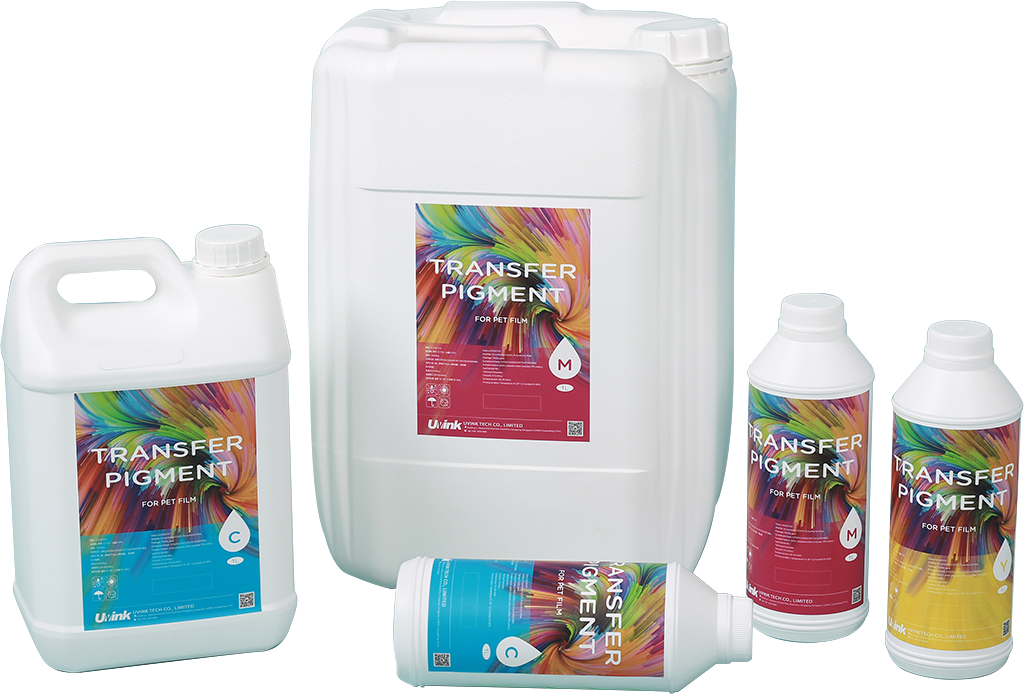
DTF ink, also known as film transfer ink, is a very popular hot stamping scheme in the market. It is also used for transfer
printing and hot stamping.There are also very mature sublimation inks on the market. What are the differences between
the two types of transfer inks in application? Let's analyzethem in detail with friends in this issue.
Different ink types
DTF ink belongs to pigment ink, and the colorant is pigment. Pigment has no affinity for all colored objects, mainly relying
on the combination of resin, adhesive, etc. in the ink with the colored objects.
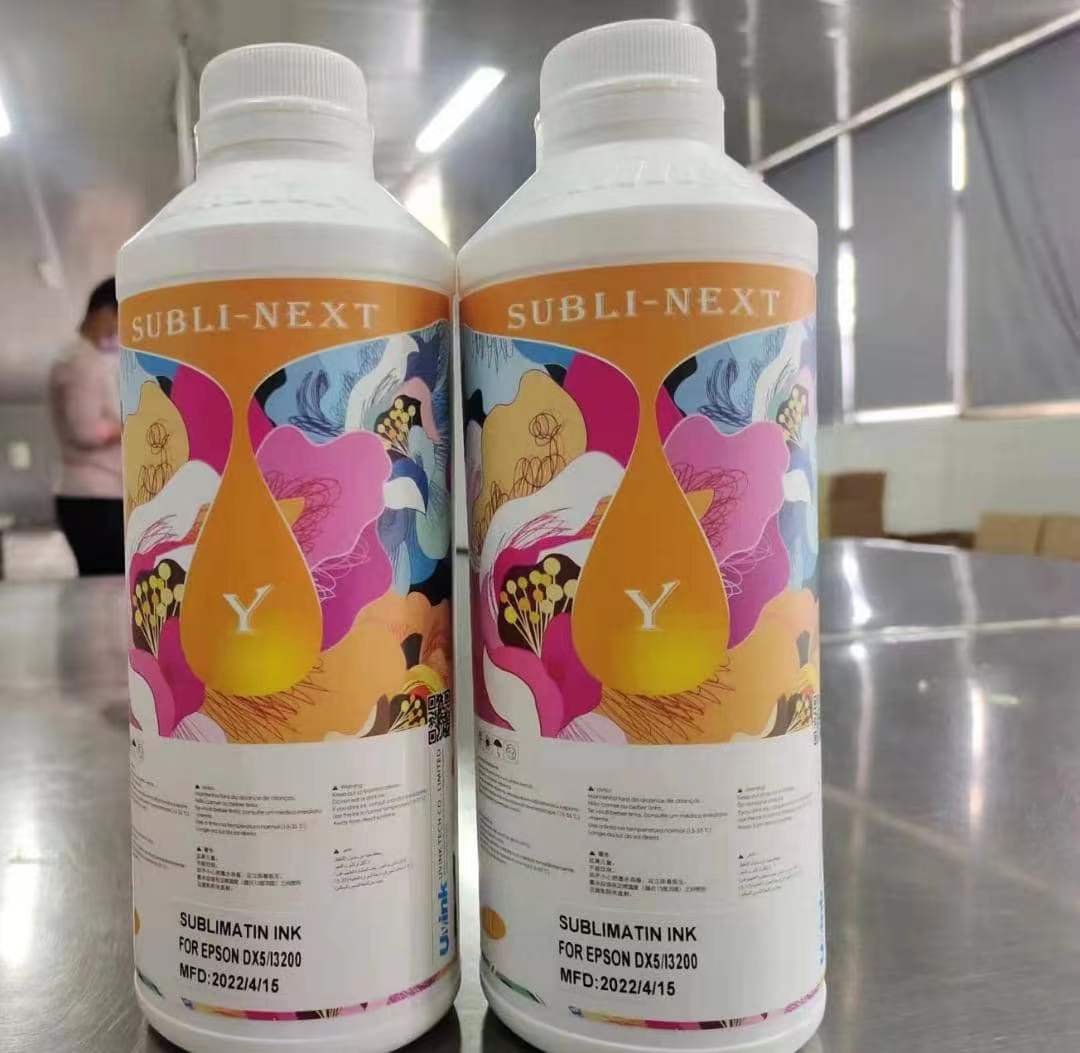
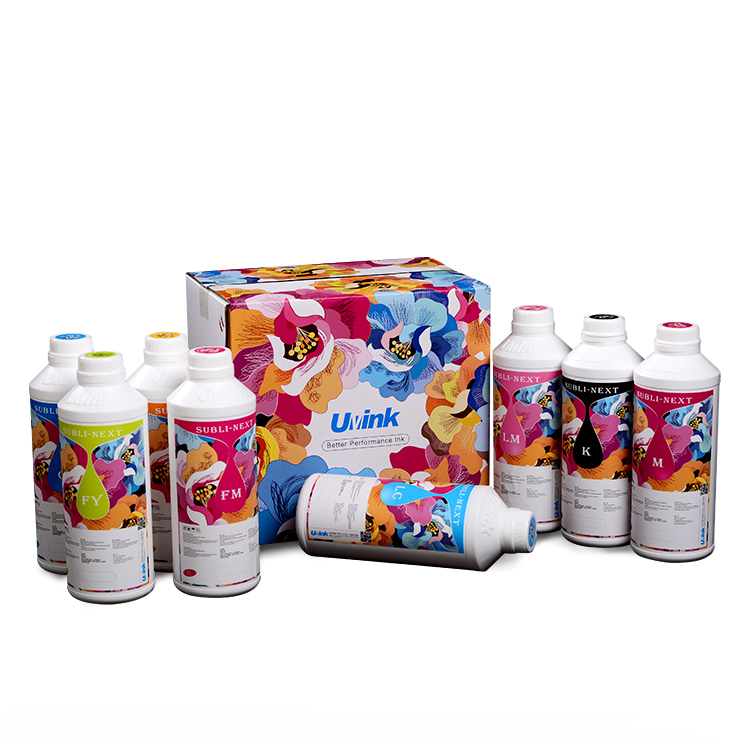
Subimation ink belongs to dye ink. The colorant is disperse dye. The dye has affinity for textile dyeing and can be adsorbed
by fiber molecules to produce reaction and bind together. Therefore, the heat transfer ink does not need to add resin, and
the stability of the heat transfer ink is better than that of the paint hot stamping ink.
Different print media
DTF ink, also known as film transfer ink, is currently used to print on the special PET film by coating ink, and then transfer it
to the fabric using the PET film as the medium. The principle is to fix the ink dot through the coating on the special PET film.
Without the special coating on the PET film, the paint ink cannot be fixed when printed on it, and the picture cannot be
opened to form a complete image.
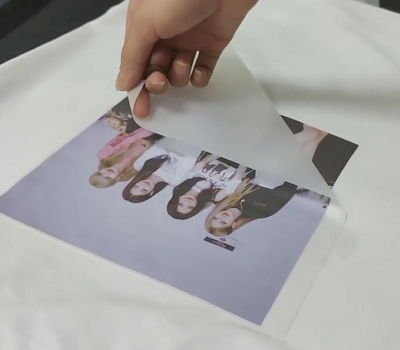
Sublimation ink is a very mature transfer scheme in the current market. The printing medium is thermal transfer paper.
Thermal transfer paper is also divided into coated paper, light coated paper and uncoated paper. Thermal transfer paper
also has a special coating, which is used to absorb thermal transfer ink. However, the coating of thermal transfer
paper is different from the PET film coating of DTF ink.
Different hair color process
The color generation process of DTF ink is 150 ℃ with a time of about 15 seconds, while that of sublimation ink is 200 ℃
with a time of about 30 seconds. This is because the types of colorants are different. The disperse dyes in the sublimation
ink can only react completely at the temperature of 200 ℃. And paint hot stamping ink does not need such a high
temperature and time can be completely colored.
Different media adaptability
According to the above differences in color development process, we can clearly judge that the medium adaptability of DTF
ink must be wider than that of sublimation ink, especially on some media whose color development temperature cannot bear
too high. The color generation process temperature of sublimation ink is 200 ℃. Under this temperature condition, many
materials or fabrics will be deformed or yellowed, while the color generation temperature of DTF ink only needs to be 150 ℃,
which can ensure smooth color generation on many media. If sublimation ink can transfer, dtf ink can transfer. If dtf ink can
transfer, sublimation ink may not be applicable. In terms of media adaptability, dtf ink has obvious advantages. This is one
of the reasons why many people think that dtf ink has a very broad prospect.

The above is the similarities and differences about the application of paint hot stamping ink and heat transfer ink shared
with friends in this issue. At present, the costs of the two schemes are different. The cost of paint hot stamping ink is
obviously higher than that of heat transfer ink, but in fact, there is no obvious conflict between the two schemes.
The paint hot stamping ink scheme still solves the problems of fastness, color, feel and other pain points of cotton
digital printing, It is mainly the expansion of pigment digital printing scheme.
For paint hot stamping, we have an overall solution including printer, hot stamping ink, hot stamping film and hot
melt powder. Welcome to consult and exchange for the ultimate cost performance!
printing and hot stamping.There are also very mature sublimation inks on the market. What are the differences between
the two types of transfer inks in application? Let's analyzethem in detail with friends in this issue.
Different ink types
DTF ink belongs to pigment ink, and the colorant is pigment. Pigment has no affinity for all colored objects, mainly relying
on the combination of resin, adhesive, etc. in the ink with the colored objects.
Subimation ink belongs to dye ink. The colorant is disperse dye. The dye has affinity for textile dyeing and can be adsorbed
by fiber molecules to produce reaction and bind together. Therefore, the heat transfer ink does not need to add resin, and
the stability of the heat transfer ink is better than that of the paint hot stamping ink.
Different print media
DTF ink, also known as film transfer ink, is currently used to print on the special PET film by coating ink, and then transfer it
to the fabric using the PET film as the medium. The principle is to fix the ink dot through the coating on the special PET film.
Without the special coating on the PET film, the paint ink cannot be fixed when printed on it, and the picture cannot be
opened to form a complete image.
Sublimation ink is a very mature transfer scheme in the current market. The printing medium is thermal transfer paper.
Thermal transfer paper is also divided into coated paper, light coated paper and uncoated paper. Thermal transfer paper
also has a special coating, which is used to absorb thermal transfer ink. However, the coating of thermal transfer
paper is different from the PET film coating of DTF ink.
Different hair color process
The color generation process of DTF ink is 150 ℃ with a time of about 15 seconds, while that of sublimation ink is 200 ℃
with a time of about 30 seconds. This is because the types of colorants are different. The disperse dyes in the sublimation
ink can only react completely at the temperature of 200 ℃. And paint hot stamping ink does not need such a high
temperature and time can be completely colored.
Different media adaptability
According to the above differences in color development process, we can clearly judge that the medium adaptability of DTF
ink must be wider than that of sublimation ink, especially on some media whose color development temperature cannot bear
too high. The color generation process temperature of sublimation ink is 200 ℃. Under this temperature condition, many
materials or fabrics will be deformed or yellowed, while the color generation temperature of DTF ink only needs to be 150 ℃,
which can ensure smooth color generation on many media. If sublimation ink can transfer, dtf ink can transfer. If dtf ink can
transfer, sublimation ink may not be applicable. In terms of media adaptability, dtf ink has obvious advantages. This is one
of the reasons why many people think that dtf ink has a very broad prospect.
The above is the similarities and differences about the application of paint hot stamping ink and heat transfer ink shared
with friends in this issue. At present, the costs of the two schemes are different. The cost of paint hot stamping ink is
obviously higher than that of heat transfer ink, but in fact, there is no obvious conflict between the two schemes.
The paint hot stamping ink scheme still solves the problems of fastness, color, feel and other pain points of cotton
digital printing, It is mainly the expansion of pigment digital printing scheme.
For paint hot stamping, we have an overall solution including printer, hot stamping ink, hot stamping film and hot
melt powder. Welcome to consult and exchange for the ultimate cost performance!
 Sublimation Ink Buying Guide for sublimation printer ink | UVINK
  DTF ink Selection Guide for dtg dtf printer | UVINK
  UV DTF Ink: What Is UV DTF for Digital Printing?
  Economic DTF Ink for DTF Printer Procolored – No‑Clog, Cost‑Effective Industrial Printing Solution
  Economic‑Grade DTF Ink – Complete Industrial Guide: How To Make DTF Transfers With Inkjet Printer
  Industrial‑Grade UV DTF Ink – Complete Buying Guide for UV DTF Stickers for Tumblers Production
  UVINK Eco Solvent Ink – Complete Industrial Buying Guide for Car Wrap Advertising Projects
  Fluorescent Sublimation Ink & Sublimation Printer Ink – Full Industrial UVINK Buyer Guide
  UVINK Economic DTF Ink – Complete Industrial Guide for DTF Printing Ink Users
  Professional‑Grade UV DTF Ink for High‑Quality UV DTF Prints – UVINK Complete Industrial Buying Guide
  Mild Solvent Ink & Outdoor Advertising Printing – Professional Industrial Guide by UVINK
  Sublimation Ink & Epson Sublimation Ink – Full Industrial Buyer Guide by UVINK
  UVINK UV DTF Ink & What Are UV DTF Stickers – Complete Industrial Guide
  UVINK Economic DTF ink: Complete Buyer Guide for dtf for shirts Printing
  Sublimation Ink & Printer Color Ink: Industrial B2B Technical Guide
  UV DTF Ink & How to Make UV DTF Stickers: Industrial Production Guide
  Solvent Ink for Wide Format Ink Jet Printer: Industrial Technical Guide
  Sublimation Ink: Professional Technical Guide for Epson Printers
  Eco-solvent Ink: Professional Industrial Guide for Epson Pro Printers
  DTF Ink: Professional Industrial Guide for Procolored DTF Printer L1800